

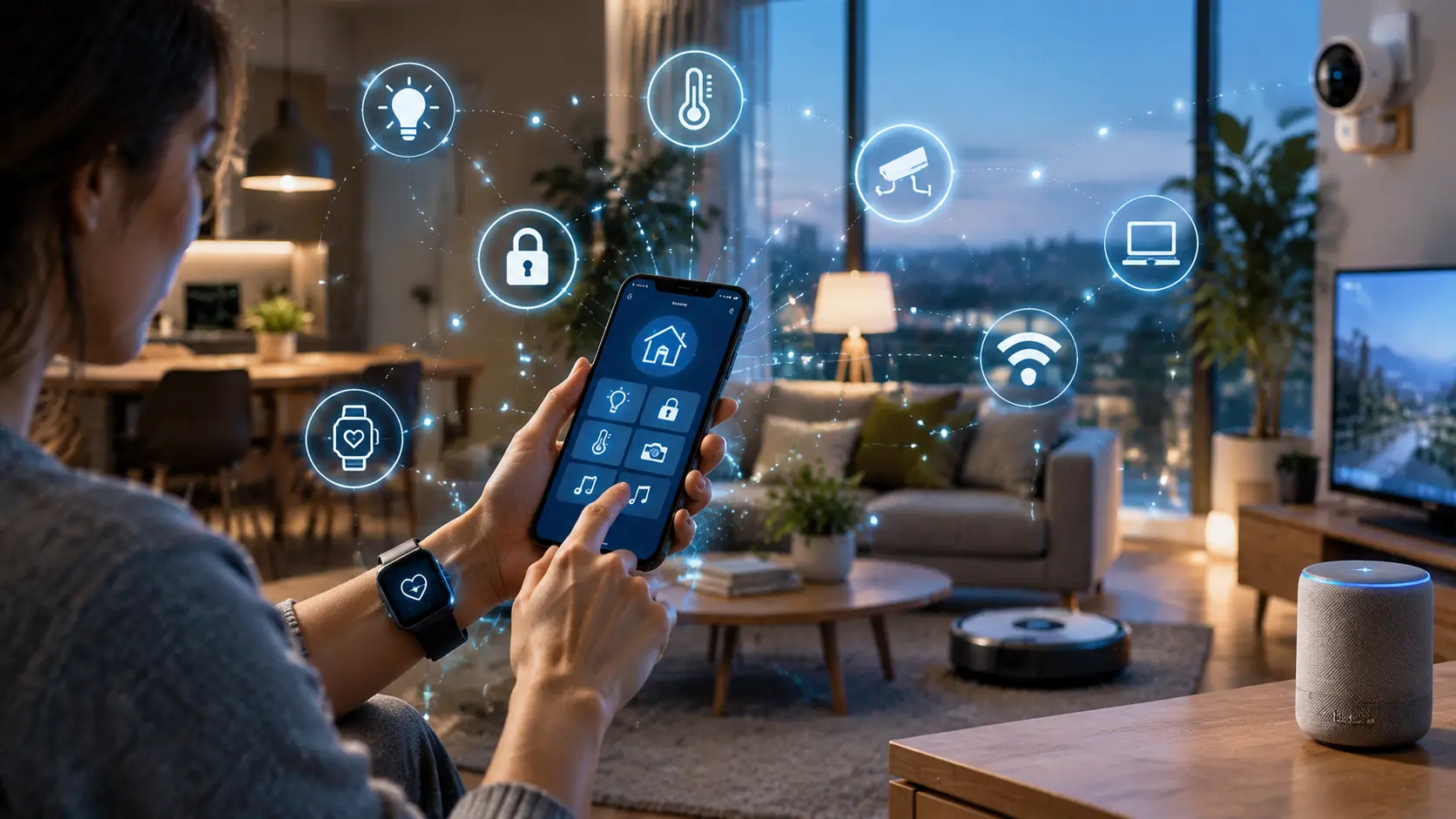
Did You Know? Everyday Objects Are Getting Smarter with IoT
Take a quick glance around you. Your mobile device tracks your movements, your wearable device keeps track of the heartbeat and the router in your home connects to multiple smart devices. The shared element of all these experiences is the Internet of Things (IoT), a revolutionary technology, that is transforming the landscape of interactivity between the digital realm and the physical world.
The IoT refers to a growing number of physical devices enabled with sensors, software, network connectivity and the ability to transfer data between one another. These devices have transitioned from experimental prototypes to available products in the last ten years, transforming how businesses function and establishing improved levels of productivity for all of us.
What Is Driving the Growth of Internet of Things Devices?
Many different factors helped fuel the fast growth of IoT devices as follows:
- Reduction in the costs for both sensors and hardware: Sensors have become smaller, less expensive, and more energy-efficient than ever before. Therefore, they can be easily integrated into a variety of different things.
- Quicker ways to connect to the internet: With the proliferation of rapid internet connections and the presence of many people having access to the internet, IoT devices can communicate with each other almost instantly.
- The use of cloud computing and data analytics: An enormous amount of data is collected by IoT devices every day and stored, analyzed, and processed in a manner not possible even a few years ago.
- A new demand for automation: More companies and individuals want to create systems that enable them to increase productivity by reducing the amount of time spent doing manual tasks.
All these elements coming together make it possible for IoT technology to expand at an incredible rate.
How Internet of Things Is Transforming Key Industries
Smart Homes and Everyday Living
One of the most visible impacts of IoT technology is in smart homes. Smart home devices are changing daily life and how we interact with our houses. Nowadays, you can control everything in your house remotely via smart home device systems such as smart lights and smart cameras and smart assistants that use voice control.
These devices help:
- Improve home security
- Improve energy savings
- Automate home chores
A good example of how smart technology helps with this is with a smart thermostat that learns how a user behaves and automatically changes the temperature, so the user doesn't need to do so. It is a way to lower energy use without managing the temperature manually.
Healthcare and Wearable Technology
Today, wearable devices and IoT devices are providing an opportunity in healthcare to monitor patients as well as to improve treatment outcomes through real-time data tracking of heart rates, sleep patterns, and physical activities. Through continuous data collection, these devices have supported:
- Earlier detection of medical conditions
- Decreasing the need to make frequent visits to the hospital
- Allowing patients to take greater control over their own health
Remote monitoring of patients has become a tremendous benefit when in-person visits are limited.
Industrial and Smart Manufacturing
IoT is also providing excellent value for organizations and manufacturers, as they can now utilize sensors attached to their machinery to monitor performance, temperature, and wear.
This will allow these organizations and manufacturers to:
- Predictively maintain machinery versus waiting to repair it reactively
- Decrease both downtime and the cost of overhead
- Manage their resources better
Connected machinery and IoT devices have given rise to what is referred to as “smart factories” with real-time data driving decisions instead of guesswork.
Challenges and Security Concerns
Despite the benefits of IoT devices, IoT presents challenges and security-related issues for many organizations. Security risks arise from the fact that many IoT devices collect sensitive information, which makes these devices attractive to hackers looking to illegally exploit the data. Privacy challenges arise from continuous data collection, which create uncertainty over who owns data, and how that data should be utilized. The issue of interoperability between IoT devices produced by different manufacturers must be overcome as some devices made by various manufacturers may not be compatible with one another. Organizations will need to strengthen their security to mitigate these challenges.
Growth of the IoT Devices Market
Connected IoT devices reached 21.1 billion by the end of 2025, representing approximately 13–14% year-over-year growth. Enterprise-focused connections accounted for roughly 45% of this total.
Analysts expect the number of connected devices to approach approximately 24 billion in 2026 if growth continues at a rate similar to that of 2025. The total could reach 40–50 billion by the late 2030s.
Overall IoT spending is expected to exceed $1 trillion annually around 2026, with current forecasts suggesting that the global market could reach approximately $1.3 trillion by 2026 and $1.39 trillion by 2031.
The Future of Internet of Things Technology
The future will see even greater intelligence and interconnectedness among IoT devices. AI integrations will add another layer of capability, allowing these devices not only to collect data but also to make autonomous decisions based on that data.
What we may see in the future include:
- Completely smart cities that optimize traffic and energy consumption
- Healthcare systems that integrate advanced analytics and deliver real-time responses to patients' needs
- Workplaces that are very fluid and flexible, with connected infrastructures to respond to actual productivity levels
As we continue to develop these technologies, there will be an increasing emphasis on the ethical use of data and the importance of sustainable innovation.
The growth of IoT devices is an example of the large-scale integration of digital technology into various aspects of our physical lives. Technologies that contain sensors, software, and network connectivity are increasingly being used throughout industries and everyday life.
The ongoing challenge of securing personal data and providing privacy for users will need to be dealt with by manufacturers and developers, but ultimately the value of IoT will outweigh these issues. The future of IoT technology and its growth will lead to a highly connected, highly automated, and most likely, highly intelligent world.