
Have you ever wondered how Netflix knows exactly what show you'll binge-watch next? Or how filters on TikTok and Snapchat can instantly lock onto your face and add bunny ears?
It might feel like magic, but it’s actually Artificial Intelligence (AI).
For many students and beginners, the term "AI" summons images of sci-fi robots taking over the world. In reality, AI is already a quiet, helpful partner in your daily life. This guide will break down what AI actually is, how it works, and why it matters for your future.
The Simple Definition
At its core, Artificial Intelligence is a branch of computer science dedicated to creating systems capable of performing tasks that typically require human intelligence.
Think of it this way:
- Traditional Programming is like writing a recipe. You give the computer step-by-step instructions (if X happens, do Y).
- Artificial Intelligence is like teaching a child. Instead of giving it a strict recipe, you show it thousands of examples (like photos of cats) and let it learn to recognize the patterns on its own.
How Does It Actually Work?
AI isn't just one "thing"; it's a collection of technologies. To understand it, you need to know about its two biggest sub-fields.
1. Machine Learning (ML)
This is the most common form of AI. Machine Learning is the process of using data to train a computer.
- Example: Your email spam filter. You didn't program it with a list of every spammer in the world. Instead, it "learned" from millions of emails marked as "spam" or "not spam" to identify junk mail automatically.
2. Deep Learning
This is a more advanced version of ML inspired by the human brain. It uses "neural networks" layers of algorithms that can process huge amounts of complex data.
- Example: Self-driving cars. They use deep learning to instantly identify pedestrians, stop signs, and other cars simultaneously.
The Two Main Types of AI
Not all AI is created equal. Experts generally categorize AI into two buckets:
1. Weak AI (Narrow AI)
This is the AI we have today. It is "narrow" because it is super-intelligent at one specific task but clueless about everything else.
- Capabilities: A chess-playing AI can beat a Grandmaster, but it cannot boil an egg or write a poem.
- Status: Everywhere (Siri, Google Maps, Alexa).
2. Strong AI (General AI)
This is the AI of the future (and science fiction). This refers to a machine that possesses human-level consciousness and can solve problems in any domain.
- Capabilities: It could learn Chinese in the morning, teach a math class in the afternoon, and paint a masterpiece in the evening.
- Status: Theoretical. We are not there yet.
5 Ways You Are Already Using AI
You likely interact with AI dozens of times before lunch. Here are a few examples you might not have noticed:
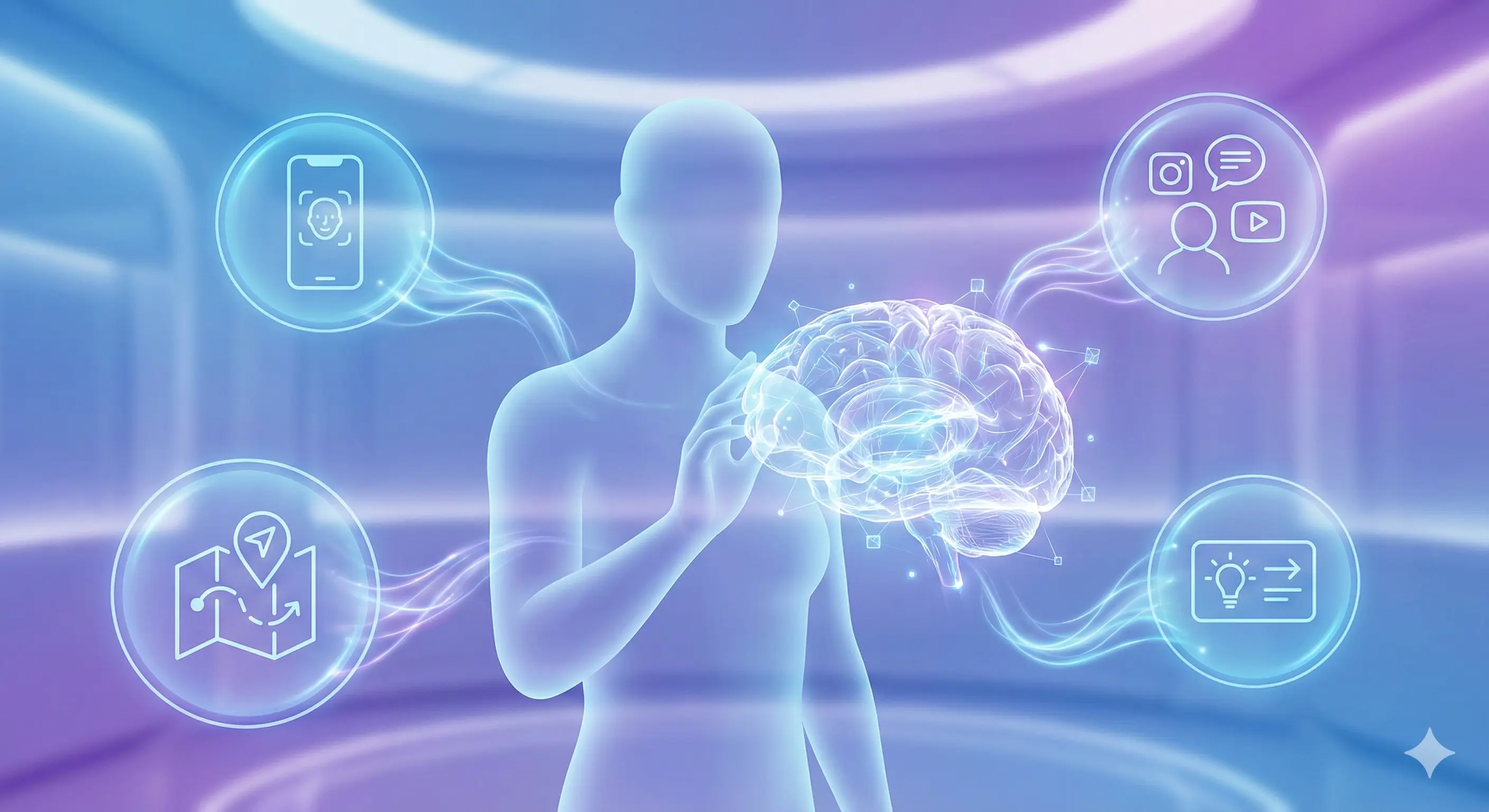
- Social Media Feeds: Instagram and TikTok use AI to analyze what you look at and serve you content designed to keep you scrolling.
- Navigation Apps: Google Maps uses AI to analyze traffic flow in real-time and route you around a jam before you even see the brake lights.
- Autocorrect & Grammarly: These tools use Natural Language Processing (NLP) to predict what you are trying to say and fix your mistakes.
- FaceID: Unlocking your phone with your face requires complex AI to map your features in 3D.
- Banking: Banks use AI to detect fraud. If your credit card is suddenly used in a country you've never visited, AI flags the transaction instantly.
Why Should Students Care?
You don't need to be a computer scientist to benefit from understanding AI. Here is why this knowledge is your superpower:
- Future Careers: AI is reshaping every industry, from art and medicine to law and engineering. Understanding how to work with AI tools will be a required skill in almost every job market.
- Critical Thinking: Knowing how AI works helps you spot "deepfakes" (fake AI-generated videos) and understand that AI can be biased if the data it learns from is biased.
- Productivity: AI tools like ChatGPT or Perplexity can act as a personal tutor, helping you summarize long articles, brainstorm essay topics, or explain complex math problems.
Conclusion
Artificial Intelligence is not about robots replacing humans; it is about machines enhancing human capabilities. Just as the calculator helped us do math faster, AI helps us think, create, and solve problems faster. The best way to prepare for the future is not to fear AI, but to stay curious and learn how to use it responsibly.